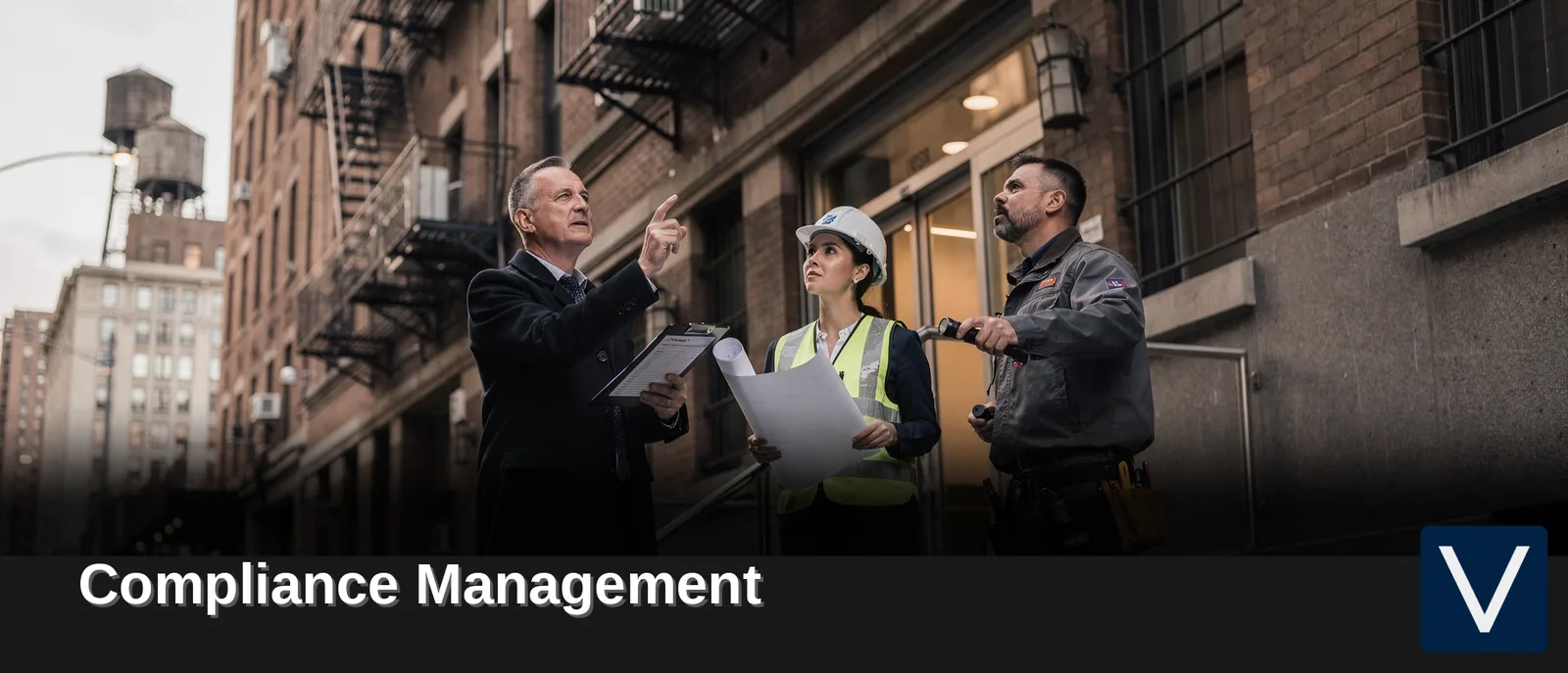
How Compliance Management Keeps NYC Buildings Up to Code
Compliance management protects NYC buildings by continuously tracking overlapping local laws. Including LL11, LL84, LL87, LL88, and LL97, covering façade…

Compliance management for co-ops and condos covers tracking fire safety, boiler, elevator, facade, sprinkler, and gas piping inspections across every building. Vanderbilt NYC APT, Inc. coordinates these deadlines through board dashboards and property manager portals, giving boards real-time visibility into inspection status, filing requirements, and vendor coordination before violations or missed deadlines occur.
Compliance management for co-op and condo buildings tracks a wide range of required inspections across multiple systems. Fire safety, boiler, elevator, facade, sprinkler, and gas piping systems each carry their own regulatory deadlines and documentation. A single building may juggle all six inspection types simultaneously, each with separate vendors, paperwork, and reporting schedules.
The traditional approach breaks down quickly. Tracking compliance across all systems with separate vendors and spreadsheets becomes unsustainable for management teams. Deadlines slip between email threads. Inspection reports vanish into filing cabinets. Board members receive updates late or not at all. The result is missed filings, fines, and liability exposure that could have been prevented.
A focused approach to NYC property management is designed for boards, backed by experienced staff, and supported by tools that simplify day-to-day operations. Professional managers consolidate the chaos into one system:
The platform handles the details of compliance, eliminating one more hassle for the building team. Instead of hunting through spreadsheets, board members see a shared calendar with due dates and progress at a glance. That visibility transforms compliance from a recurring headache into a manageable, predictable process. Buildings that adopt structured tracking avoid the scramble that comes with surprise violations or expired certificates.

Legal compliance for co-op and condo boards has mushroomed into a far more complex responsibility than it was just a few years ago. Representing co-ops and condos has become objectively more challenging in recent years because one aspect of the role, legal compliance, has expanded dramatically. Boards now face a growing web of local, state, and federal regulations that demand constant attention and specialized knowledge.
Legal compliance is just one of the areas of law that a co-op and condo board lawyer must master. The regulatory landscape now spans fire safety, boiler inspections, elevator certifications, facade examinations, sprinkler system checks, and gas piping compliance. Each category carries its own filing deadlines, penalty structures, and documentation requirements. Missing a single deadline can trigger fines, legal liability, or even emergency shutdowns that disrupt residents’ lives.
The most effective approach involves working closely with vendors and legal experts to prevent issues before they arise. Proactive Compliance Management transforms a reactive scramble into a structured, predictable process. Boards that integrate compliance calendars into their regular operations gain visibility into upcoming deadlines and required inspections months in advance.
The expert team at Vanderbilt NYC APT, Inc. manages renovations, timelines, and compliance calendars as part of its property management services. This structured approach eliminates the guesswork that leaves many boards vulnerable to regulatory missteps. Rather than treating compliance as an annual headache, boards that embed it into daily operations reduce risk and protect property values. The difference between a building that handles compliance smoothly. One that faces repeated violations often comes down to having the right systems. Expert partners in place from the start.

Co-op and condo compliance duties diverge at the ownership level, which reshapes every regulatory obligation. In New York City, co-ops outnumber condos approximately 2 to 1, reflecting the prominence of cooperative living and its unique management structure. A co-op resident does not own a unit outright. Instead, that resident owns shares in a corporation that owns the building. That corporate structure creates distinct compliance layers.
Every co-op has a board, with board members elected by the residents. Board members are also fellow residents or shareholders, assigned to manage the association. This means the board carries direct fiduciary responsibility for building-wide compliance. Fire safety, boiler inspections, elevator certifications, facade examinations, and gas piping checks all land on the board’s calendar. The company overseeing daily operations, onsite staff, and large capital projects specifically for cooperative and condominium properties handles the execution. But the board retains ultimate accountability.
| Compliance Area | Co-op Board Role | Condo Board Role |
|---|---|---|
| Shareholder/unit owner compliance | Board enforces proprietary lease rules | Board enforces declaration/bylaws |
| Building systems (fire, boiler, elevator) | Board manages directly | Board manages directly |
| Individual unit alterations | Board approval required | Unit owner approval, board notification |
| Financial audits | Board oversees corporate audit | Board oversees association audit |
Condo boards face similar building-system compliance duties, fire safety, structural inspections, and elevator maintenance. The difference emerges at the unit level. Condo owners hold fee-simple title to their units, so individual owners bear more direct responsibility for unit-specific compliance items. Co-op boards, by contrast, enforce proprietary lease terms that can restrict subletting, renovation timelines, and even financing requirements. Both structures demand rigorous Compliance Management, but the co-op model concentrates more authority. And more liability, in the elected board.

Condo boards and co-op shareholders expect regular compliance updates. Assembling status reports from scattered vendor records and paper files consumes hours of property management time. Vanderbilt NYC APT, Inc. provides painless, simple, straightforward reporting available to boards 24/7 for smoother operations. This eliminates the manual work of chasing down inspection results and reconciling spreadsheets.
Boards can view a shared calendar with due dates and progress for compliance items. The company organizes every request, complaint, or inquiry specifically by sender and context, offering real response time. This means a board member sees exactly where a fire safety inspection stands or when a boiler certificate expires without calling the management office.
| Compliance Tracking Feature | What It Does for Boards |
|---|---|
| Shared calendar with due dates | Displays upcoming deadlines and current progress for each inspection type |
| Centralized reporting dashboard | Provides 24/7 access to status reports without vendor calls |
| Organized request tracking | Logs every inquiry by sender and context for transparent response times |
The system replaces fragmented paper trails with a single source of truth. Boards receive clear visibility into fire safety, boiler, elevator, facade, sprinkler, and gas piping compliance across all building systems. This approach prevents missed deadlines and the fines that follow non-compliance.
Vendor coordination prevents compliance failures by creating a single chain of accountability between building staff, contractors, and regulatory deadlines. Without this coordination, inspection dates slip, paperwork goes missing, and buildings face fines or legal action. A coordinated approach ensures every vendor knows their responsibilities and delivers on time.
Compliance Management depends on clear communication across multiple parties. The senior agent at Vanderbilt NYC APT, Inc. serves as the primary point of contact between superintendents, building staff, contractors, and vendors. This central role eliminates confusion about who handles which inspection or repair. When one person owns the vendor relationship, nothing falls through the cracks.
Uncoordinated vendors create compliance gaps. A boiler inspector might arrive without the previous year’s report. A facade contractor might miss a filing deadline because no one tracked the calendar. These failures trigger DOB violations, emergency repairs, and higher insurance premiums. The cost of poor coordination far exceeds the effort of managing it properly.
Vendor coordination extends beyond phone calls and emails. Through both scheduled and impromptu property inspections, the team maintains close oversight of building conditions. This hands-on approach catches small issues before they become compliance problems. The company also manages timelines, contractors, and details to complete projects with minimal disruption to building operations.
Regular board communication reinforces vendor accountability. The team provides regular updates to the Board during routine Board Meetings and Annual Meetings with building ownership. These updates keep everyone informed about vendor performance, inspection status, and upcoming deadlines. Transparency builds trust and prevents surprises.
| Coordination Element | Compliance Benefit |
|---|---|
| Single point of contact | Eliminates miscommunication between vendors |
| Property inspections | Catches issues before they trigger violations |
| Board meeting updates | Keeps leadership informed of compliance status |
| Timeline management | Ensures deadlines are met without last-minute rushes |
Missed compliance deadlines expose co-op and condo buildings to fines, legal liability, and safety hazards. Tracking compliance across multiple inspection types with separate vendors. Spreadsheets are unsustainable, leading directly to these missed deadlines and the regulatory risk that follows. A single overlooked fire safety inspection or elevator certification can trigger city violations that compound quickly.
When deadlines slip, boards face emergency repair costs that far exceed routine maintenance expenses. The company aims to simplify and enhance building operations by offering services such as emergency response, maintenance oversight, vendor coordination, legal compliance, and comprehensive financial reporting. Without a centralized system, property managers scramble to locate paperwork, coordinate last-minute vendor appointments, and explain lapses to residents.
The financial impact extends beyond fines. Insurance premiums rise after violations are recorded. Lenders may delay or deny refinancing applications for buildings with outstanding compliance issues. The company’s ethos is built on trust, service, and connection, helping build strong foundations for smoother operations. Boards that ignore compliance management risk eroding that trust with shareholders and residents alike.
Common consequences of missed compliance deadlines include:
The company keeps properties safe, efficient, and operating at their best without the hassle of manual compliance tracking. A proactive approach to Compliance Management prevents these cascading problems before they start. Boards that invest in structured compliance systems avoid the stress, cost, and reputational damage that follow missed deadlines.
A compliance calendar transforms scattered deadlines into a single, visible timeline that boards can track month by month. Vanderbilt NYC APT, Inc. manages these calendars as part of its core service, working directly with vendors and legal experts to prevent issues before they arise. Without this centralized view, boards risk missing critical inspection dates, filing windows, or renewal periods. Mistakes that trigger fines, legal exposure, and emergency repair costs.
The platform provides a shared calendar populated with due dates and real-time progress updates for every compliance item. Boards see exactly where each inspection or filing stands: scheduled, in progress, completed, or overdue. Without chasing down vendors or staff for status reports. This eliminates the guesswork that typically consumes board meeting time and creates accountability across the entire building team.
The expert team provides regular compliance updates during routine Board Meetings. Annual Meetings, ensuring the calendar’s status is always visible to decision-makers. These updates cover upcoming deadlines, completed items, and any vendor delays that require board action. Boards walk into each meeting knowing exactly what is on track. What needs attention, rather than spending the first 20 minutes getting briefed on basic compliance status.
A compliance calendar does more than track dates; it shifts the building’s approach from reactive scrambling to proactive planning. The platform handles the details of compliance, eliminating one more hassle for the building team and freeing board members to focus on capital planning, resident satisfaction, and long-term property value. Boards that rely on a structured calendar avoid the 11th-hour vendor calls. Emergency board votes plague buildings without one.
A board improves compliance by partnering with a management team that treats regulatory work as a shared responsibility, not a checkbox. Vanderbilt NYC APT, Inc. delivers tailored management with heart and hustle, designed specifically for NYC properties and their local requirements. This approach keeps co-op and condo boards ahead of inspections, filings, and deadlines.
Compliance Management fails when boards juggle it alone. Spreadsheets, scattered vendor contacts, and missed calendar dates create exposure to fines and safety risks. A dedicated partner centralizes these duties, giving boards a clear view of what is due and what is done.
A true partnership shifts the relationship from transactional to collaborative. Vanderbilt’s mission is to offer not just management. A genuine partnership ensures properties are well cared for at every stage. That means the management team tracks timelines, coordinates vendors, and flags issues before they become violations.
Transparency gives board members confidence that nothing slips through. Vanderbilt emphasizes transparency and trust in its interactions with boards and vendors, which supports smoother operations and clearer decision-making. When boards can see progress and reporting at any time, they spend less energy chasing updates and more time governing.
The first step is a conversation. Management starts with a hello. Vanderbilt encourages boards to reach out and connect with their team to discuss a switch. A simple introductory call lets a board evaluate responsiveness, reporting tools, and local expertise before making any commitment.
Boards that wait for violations to surface pay the price in fines and emergency repairs. Proactive boards reduce that risk by choosing a partner built for NYC’s regulatory landscape.
Compliance management for co-ops and condos represents far more than checking boxes; it’s the backbone of responsible building stewardship. By addressing legal requirements, financial oversight, and operational standards, property managers protect both the building’s integrity and the residents within it. When boards partner with experienced compliance professionals, they transform potential vulnerabilities into strengths, ensuring their communities operate with confidence and transparency for years to come.
It covers tracking every required inspection and filing across a building’s systems, including fire safety, boiler, elevator, facade, sprinkler, and gas piping. Each system carries its own deadlines, vendors, and paperwork, so compliance management centralizes tracking, documentation, and reporting so boards always know what’s due and what’s been completed.
Missed deadlines can trigger city-issued fines that accumulate daily, emergency repair costs, higher insurance premiums, and even delayed or denied refinancing. A single overlooked inspection, like an elevator certification or fire safety check, can escalate into a violation that compounds quickly if it isn’t addressed.
Co-op boards carry direct fiduciary responsibility for building-wide compliance and enforce proprietary lease rules, including restrictions on subletting and renovations. Condo boards manage the same building-system inspections, but individual unit owners hold more direct responsibility for unit-specific compliance, since they hold fee-simple title to their units.
A shared compliance calendar gives boards real-time visibility into every inspection and filing status, whether it’s scheduled, in progress, completed, or overdue. This replaces scattered vendor records and spreadsheets with a single source of truth, and status updates delivered at board meetings keep everyone informed without the last-minute scramble.
Vendor coordination creates a single chain of accountability between building staff, contractors, and regulatory deadlines. Without it, inspection dates slip, and paperwork goes missing, leading to DOB violations and emergency repairs. A dedicated point of contact ensures every vendor knows their responsibilities and delivers on schedule.
In a city as regulated as New York, falling behind on compliance isn’t just risky; it’s costly. Vanderbilt NYC Apt Management delivers proactive compliance management designed to safeguard your property, your tenants, and your bottom line.
Our seasoned team stays ahead of regulatory changes, manages critical deadlines, and ensures every aspect of your building meets the highest standards, so you avoid fines, legal troubles, and operational disruptions. But the best defense is a timely one, and every day without expert compliance oversight is a day of unnecessary exposure. Contact Vanderbilt NYC Apt Management now, take control of your property’s compliance, and build a foundation for long-term success.