
What Compliance Management Covers for Co-ops and Condos
Compliance management for co-ops and condos covers tracking fire safety, boiler, elevator, facade, sprinkler, and gas piping inspections across every…

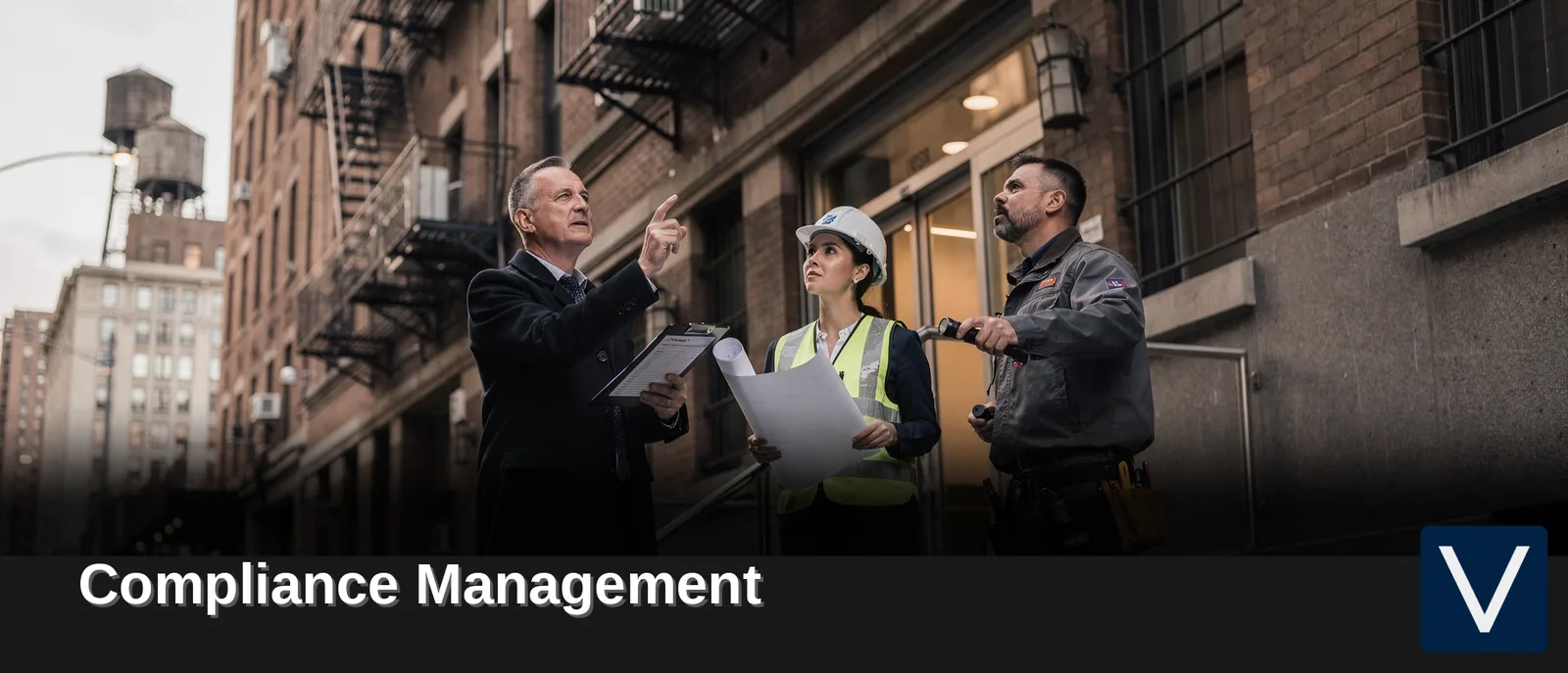
Compliance management protects NYC buildings by continuously tracking overlapping local laws. Including LL11, LL84, LL87, LL88, and LL97, covering façade safety, energy benchmarking, emissions, and fire safety. Vanderbilt NYC APT, Inc. coordinates vendors, deadlines, and board reporting to prevent six-figure penalties, stop-work orders, and insurance or financing barriers before they arise.
**Compliance management** for New York City buildings is the year-round process of tracking and responding to overlapping local laws that govern façade safety, energy benchmarking, greenhouse gas emissions, and fire and structural safety. Property owners and managers must continuously monitor these regulations to avoid penalties and maintain safe operations. The Department of Buildings (DOB) enforces the City’s Building Code, Electrical Code, Zoning Resolution, New York State Labor Law, and New York State Multiple Dwelling Law across over one million buildings and construction sites.
NYC building compliance has evolved from an occasional filing task into a continuous governance responsibility. Failing to manage local laws like LL11, LL84, LL87, LL88, and LL97 can trigger six-figure annual penalties, stop-work orders, and barriers to securing insurance or financing. Structured compliance management protects building owners, boards, and managers from personal liability while keeping properties safe.
Building owners in New York City are responsible for following city codes to ensure the safety of residents and surrounding areas. The DOB enforces these regulations through:
Reliable management is essential to keep a building in compliance. Owners should seek qualified management that maintains regular communication to ensure protocols are followed properly. Without structured oversight, overlapping deadlines and evolving requirements create gaps that expose properties to enforcement actions and safety risks.

NYC building compliance has shifted from an occasional filing task into a board-level, year-round governance responsibility. Property owners and managers must now track overlapping local laws continuously, covering façade safety, energy benchmarking, greenhouse gas emissions, and fire and structural safety. Buildings contribute nearly 70% of New York City’s greenhouse gas emissions, which makes energy performance and emissions reporting core legal obligations under the Climate Mobilization Act.
The cost of falling behind is severe. Failing to manage local law compliance across laws like LL11, LL84, LL87, LL88, and LL97 can trigger six-figure annual penalties, stop-work orders, and barriers to securing insurance or financing. A single missed filing deadline can cascade into months of remediation work and legal exposure.
Penalties accumulate quickly, and the consequences extend beyond fines. Stop-work orders halt renovations and routine maintenance, while insurers and lenders view non-compliant buildings as high-risk assets. Boards that ignore these obligations also expose individual members to personal liability.
Structured Compliance Management protects building owners, boards, and managers from personal liability while preserving asset value and structural integrity. A proactive system tracks every deadline, coordinates vendor inspections, and documents each filing before the city issues a violation. This approach turns compliance from a reactive scramble into a predictable, year-round process.
| Compliance Risk | Unmanaged Outcome | Managed Outcome |
|---|---|---|
| Missed LL84 benchmarking | Six-figure penalties | Timely filing, no fines |
| Façade inspection gaps (LL11) | Stop-work orders | Scheduled repairs, safe façade |
| Emissions non-compliance (LL97) | Insurance barriers | Documented energy plan |
For NYC property teams, the choice is straightforward: invest in year-round compliance oversight now, or pay far more in penalties, legal fees, and lost financing opportunities later.

New York City property owners face a dense web of overlapping local laws covering façade safety, energy benchmarking, greenhouse gas emissions, and fire and structural safety. Missing a single filing deadline triggers cascading consequences, including six-figure annual penalties, stop-work orders, and barriers to securing insurance or financing. Compliance Management in NYC now demands year-round attention rather than occasional filing tasks.
Local Law 11 requires periodic façade inspections and safety reports for buildings over six stories. Property owners must track inspection cycles carefully, because a missed cycle leaves a building exposed to violations and potential liability. The Department of Buildings enforces this law through its review and approval of building plans, permitting functions, and inspections.
Local Law 84 mandates annual energy benchmarking and reporting for large buildings. Owners who skip this filing lose credibility with regulators and may face escalating scrutiny. Local Law 87 goes further, requiring energy audits and retro-commissioning every ten years for buildings over 50,000 square feet.
Local Law 97 sets carbon emission limits for large buildings, with escalating penalties for non-compliance. This law transforms energy management from an operational concern into a financial imperative.
| Local Law | Requirement | Building Size |
|---|---|---|
| LL11 | Façade inspections | Over 6 stories |
| LL84 | Annual energy benchmarking | Large buildings |
| LL87 | Energy audits every 10 years | Over 50,000 sq ft |
| LL97 | Carbon emission limits | Large buildings |
The Department of Buildings enforces these regulations through plan review, permitting, licensing, and inspections. Owners who track these laws proactively avoid the costly disruptions that follow missed deadlines. A structured compliance calendar prevents violations before they trigger penalties.

Compliance management prevents costly fines by creating a structured system that tracks every regulatory deadline, inspection requirement, and filing obligation across New York City properties. The Department of Buildings enforces the City’s Building Code, Electrical Code, and Zoning Resolution to promote worker and public safety. Missing a single filing can trigger cascading penalties that compound quickly. These consequences make proactive compliance management a financial necessity rather than an administrative option.
Local Law 11 (façade inspections), Local Law 84 (energy benchmarking), and Local Law 97 (carbon emissions limits) carry the steepest penalty structures for non-compliance. Each law operates on its own calendar with distinct filing deadlines, inspection cycles, and documentation requirements. A missed Local Law 11 filing can halt building operations entirely through stop-work orders. Local Law 97 violations expose building owners to annual penalties that reach six figures for properties exceeding emissions caps. These overlapping requirements demand a coordinated tracking system.
Vanderbilt NYC APT, Inc. manages compliance calendars and works closely with vendors and legal experts to prevent issues before they arise. Regular communication between building owners and management ensures protocols are followed properly, avoiding delinquencies. The management team coordinates with structural engineers for façade inspections, energy consultants for benchmarking reports, and legal counsel for filing submissions. This network catches potential violations during the planning phase rather than after a DOB inspection. The result is a compliance posture that protects property value and avoids the financial shock of unexpected penalties.
A property manager acts as the operational backbone for legal and regulatory adherence in New York City buildings. Vanderbilt NYC APT, Inc. integrates Compliance Management directly into its service model, offering emergency response, maintenance oversight, vendor coordination, legal compliance, and comprehensive financial reporting. Without this structured oversight, building owners risk falling behind on overlapping local laws that govern façade safety, energy benchmarking, and fire safety.
John Cirella, Senior Agent at Vanderbilt NYC APT, Inc., oversees daily operations, onsite staff, and large capital projects specifically for cooperative and condominium properties. Drawing on over 10 years of diversified real estate experience, Cirella serves as the primary point of contact between superintendents, building staff, contractors, and vendors. This central coordination prevents communication breakdowns that lead to missed filing deadlines or incomplete inspections.
Reliable management is essential to keep a building in compliance. Upon purchase of a building, owners should seek out qualified management immediately. A property manager typically handles:
Cirella provides these updates directly to Boards, ensuring ownership stays informed about compliance status. This proactive approach prevents six-figure annual penalties and stop-work orders that plague non-compliant buildings.
Boards stay ahead of compliance deadlines by centralizing every due date, filing, and inspection into one visible system. A shared calendar with due dates and progress tracking gives board members a real-time view of what is due and what is already complete. Without this visibility, a missed Local Law filing can trigger six-figure penalties, stop-work orders, and barriers to securing insurance or financing.
Compliance Management becomes a year-round governance responsibility rather than an occasional filing task. Boards that rely on scattered emails or spreadsheets risk overlooking overlapping deadlines for façade safety, energy benchmarking, and fire safety. A structured approach prevents those gaps before they become costly violations.
A shared calendar with due dates and progress tracking serves as the operational backbone. Boards can see at a glance which tasks are pending, which are in progress, and which are complete. This eliminates the guesswork and keeps every stakeholder aligned on the same timeline.
Expert teams manage renovations, timelines, and compliance calendars while working closely with vendors and legal experts. This collaboration prevents issues before they arise, rather than reacting after a violation notice arrives. The Department of Buildings has also strengthened its education. Outreach programs give property owners a heightened understanding of safety awareness.
Painless, simple, straightforward reporting is available to boards 24/7 for smoother operations. That continuous access means a board member can check status at any hour, not just during business hours. The result is a proactive stance on compliance, not a reactive scramble.
Neglecting compliance in New York City buildings triggers severe consequences that compound rapidly. Property owners who fail to manage local law requirements across regulations like LL11, LL84, LL87, LL88, and LL97 face six-figure annual penalties, stop-work orders, and significant barriers to securing insurance or financing. These financial and operational repercussions cascade quickly, turning a manageable oversight into a crisis that threatens both building operations and property value.
The Department of Buildings enforces compliance through rigorous inspections and professional analysis of accidents to prevent future incidents. When violations surface, DOB can issue stop-work orders that halt all construction activity, delay certificate of occupancy renewals, and trigger mandatory corrective actions at the owner’s expense. These enforcement actions disrupt tenant relations, delay capital projects, and create administrative burdens that consume staff time and resources.
Building owners in New York City bear direct responsibility for following city codes to ensure the safety of inhabitants and neighbors. Structured Compliance Management protects owners, boards, and managers from personal liability while preserving asset value and structural integrity. Without this protection, individual board members and property managers face personal financial exposure for violations, lawsuits from injured parties, and potential criminal liability in cases involving negligence or willful disregard of safety regulations. The legal costs alone can exceed the expense of maintaining proper compliance systems.
The path from neglected compliance to financial ruin follows a predictable trajectory. A single missed filing escalates into fines, fines trigger inspections, inspections uncover additional violations, and the compounding penalties quickly reach six figures. Property owners who invest in structured compliance management avoid this downward spiral entirely, protecting both their personal assets and their building’s long-term value.
Selecting a compliance-focused management partner for a New York City property requires evaluating a firm’s ability to handle the city’s overlapping regulatory demands. A qualified partner should demonstrate expertise in NYC co-ops, condos, and rentals, with a proven record of maintaining legal compliance across local laws. Without this focus, building owners risk six-figure penalties, stop-work orders, and barriers to securing insurance or financing.
A strong partner provides Compliance Management as a core service, not an add-on. This includes tracking deadlines for façade inspections (Local Law 11), energy benchmarking (Local Law 84), and greenhouse gas emissions (Local Law 97). The firm should coordinate with vendors, legal experts, and building staff to prevent violations before they occur. Vanderbilt NYC APT, Inc. specializes in tailored property management for NYC properties, emphasizing trust, service, and connection to ensure buildings remain compliant year-round.
Responsiveness directly determines whether a building meets filing deadlines or faces penalties. A management partner noted for professionalism ensures clear and efficient communication between building teams, homeowners, and boards. This prevents missed compliance dates and allows for rapid response to DOB inspections or emergency repairs. The company’s mission is to offer not just management. A true partnership, ensuring properties are well cared for through proactive oversight.
| Selection Criteria | What to Evaluate |
|---|---|
| Regulatory knowledge | Track record with NYC Local Laws, DOB filings, and compliance calendars |
| Communication systems | 24/7 emergency response and transparent board reporting |
| Vendor relationships | Established network of qualified contractors and legal experts |
| Portfolio experience | History managing co-ops, condos, and rentals across multiple buildings |
Upon purchase of a building, owners should seek out a qualified, reputable management company. For owners who already have management in place, regular compliance audits ensure the partner remains accountable. The right firm treats compliance as a continuous partnership, not a seasonal filing task.
NYC compliance management covers overlapping regulations including Local Law 11 (façade inspections), Local Law 84 (annual energy benchmarking), Local Law 87 (energy audits and retro-commissioning), Local Law 88 (lighting and submetering upgrades), and Local Law 97 (carbon emission limits), along with fire and structural safety requirements enforced by the Department of Buildings.
Missing a filing deadline can trigger six-figure annual penalties, stop-work orders that halt renovations and routine maintenance, and barriers to securing insurance or financing. Insurers and lenders also tend to view non-compliant buildings as higher-risk assets.
Building owners and boards bear ultimate responsibility, but most rely on a property manager to coordinate the day-to-day work. Vanderbilt NYC APT, Inc. manages compliance calendars, coordinates vendors and legal experts, and provides regular board reporting to keep filings on track.
Local Law 11 requires periodic façade inspections and safety reports for buildings over six stories, on a recurring cycle set by the Department of Buildings. Tracking these cycles carefully is essential, since a missed inspection window leaves a building exposed to violations and liability.
Professional compliance management centralizes every deadline, filing, and inspection into one visible system, replacing scattered emails or spreadsheets. This reduces the risk of overlooked deadlines and gives boards a real-time view of compliance status, backed by coordination with vendors, structural engineers, and legal counsel.
Navigating New York City’s complex regulatory landscape doesn’t have to be a constant headache. At Vanderbilt NYC Apt Management, our expert compliance management services take the guesswork out of staying current with ever-changing local, state, and federal regulations. From ensuring your property meets all safety codes and rent stabilization requirements to handling documentation and inspections with precision, we protect your investment while freeing you to focus on what matters most.
Don’t let compliance violations drain your time and profits; partner with Vanderbilt NYC Apt Management today and experience the peace of mind that comes from knowing your property is always in full compliance.