What Compliance Management Covers for Co-ops and Condos
Compliance management for co-ops and condos covers tracking fire safety, boiler, elevator, facade, sprinkler, and gas piping inspections across every…

Real estate returns play out over years, not months. Yet many property owners fixate on monthly management fees while overlooking the compounding impact of daily decisions on their property’s long-term value. The difference between a property that appreciates steadily and one that stagnates often comes down to management quality, not market cycles.
Even during strong real estate market conditions, like those seen in many US metros from 2015 through 2024, mismanaged properties consistently underperformed well-maintained properties in the same neighborhoods. Location matters, but it doesn’t override neglect. The property’s long-term value is shaped by ongoing management decisions such as consistent maintenance, tenant relations, and financial oversight, not just by market forces.
This article answers a practical question: how does professional property management protect and grow value over a 10–20+ year horizon? Whether you own a single rental property or manage a small commercial property portfolio, the principles remain the same.
We’ll cover eight core pillars that drive long-term value: maintenance and capital planning, tenant quality and stability, vacancy control, strategic rent planning, legal compliance and risk management, financial oversight, curb appeal, and positioning for refinance or sale.
Property management is the backbone of successful real estate investment, directly influencing property value, rental income, and the overall financial performance of any asset. For property owners, effective property management means more than just collecting rent; it encompasses a comprehensive approach to tenant retention, preventive maintenance, and strict adherence to fair housing laws and federal regulations. By investing in professional property management services, property owners can ensure their properties are well-maintained, compliant, and positioned for long-term growth.
A dedicated property management team handles the day-to-day complexities of managing properties, from addressing tenant concerns to overseeing rent collection and implementing preventive maintenance schedules. This proactive approach not only reduces tenant turnover but also helps maintain steady rental income and enhances the property’s market value. In a competitive real estate landscape, professional property management is essential for safeguarding your investment and maximizing returns over time.
The daily choices property managers make, response times to tenant concerns, vendor selection, and inspection routines compound significantly over 5–15 years. What seems like a minor decision today becomes a major value driver or detractor a decade from now.
Response Time and Vendor Selection
Consider this concrete example: a property manager discovers a small roof leak in 2026. Addressing it immediately costs a few hundred dollars and a single service call. Ignoring it leads to structural damage, mold remediation, and potential tenant health claims by 2029, turning a minor repair into costly emergency repairs running tens of thousands of dollars. Proactive maintenance not only prevents these expensive emergencies but also helps minimize overall repair costs, preserving long-term profitability.
Property value is path-dependent. Properties with consistent good habits, documented inspections, maintenance checklists, and scheduled servicing achieve smoother appraisals and higher buyer confidence when it’s time to sell or refinance.
Written Management Plans Anchor Consistency
Skilled property managers establish written systems that outlive any individual staff member:
These systems ensure operational efficiency regardless of personnel changes. When every decision follows a documented process, property owners avoid the inconsistency that leads to deferred maintenance and reactive problem-solving.
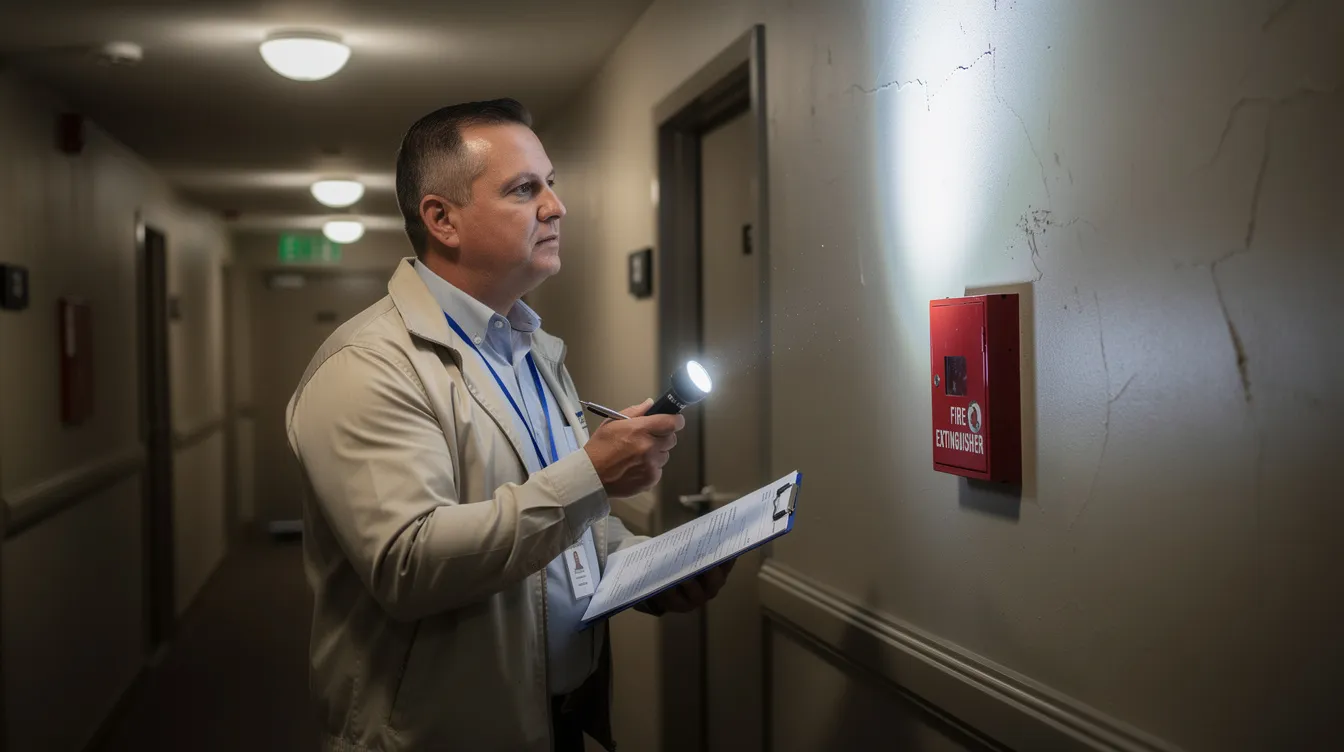
There’s an important distinction between routine maintenance and capital improvements. Routine maintenance keeps operational systems functioning day-to-day, changing filters, clearing drains, and servicing equipment. Capital improvements are long-lived upgrades that extend asset life or add functionality, replacing roofs, upgrading electrical systems, or installing new HVAC systems.
Effective property management integrates both through preventive maintenance programs that catch small issues before they become major failures. Properties with well-maintained facilities generate higher cash flows and appreciate faster than neglected assets.
A Realistic Preventive Maintenance Schedule
Proactive property management follows schedules like this:
Planned vs. Emergency Replacement
Consider a 20-year-old boiler approaching end-of-life. With proactive management, the property owner schedules replacement for summer 2027, obtaining competitive bids, selecting optimal timing, and avoiding tenant disruption. Without planning, the boiler fails during a January cold snap, requiring emergency replacement at premium prices while tenants demand temporary heating solutions.
The cost difference between these scenarios often exceeds 40–50%, not counting reputational damage and tenant dissatisfaction.
Documentation Supports Valuation
Clean, comprehensive maintenance records directly support higher valuations:
When a potential buyer reviews a property with ten years of organized maintenance records, they perceive lower risk and are willing to pay more per square foot.
Case Example: The 30-Unit Building
A 30-unit residential building that replaced major building systems on schedule, roof in 2015, HVAC systems in 2020, parking lot resurfacing in 2023, sold in 2024 for 12% above comparable properties in the same submarket. The buyer’s appraiser specifically noted the documented maintenance history as justification for reduced deferred maintenance adjustments.
Tenant stability directly drives net operating income (NOI), which is the primary determinant of property value in income-producing real estate. When you understand that property value equals NOI divided by capitalization rate, you recognize that more stable, predictable rental income supports higher valuations.
Professional Tenant Screening Reduces Risk
Experienced property managers implement tenant screening protocols that filter for qualified tenants:
Poor screening decisions made at lease inception compound negatively over the years through defaults, evictions, and property damage. Strong tenant relationships start with selecting high-quality tenants who will pay rent consistently.
Responsive Management Drives Tenant Retention
Maintaining tenant satisfaction requires responsive property maintenance and clear communication. Professional management typically targets:
When tenants feel supported, they renew leases more frequently. Longer tenant stays reduce tenant turnover, stabilize income, and contribute to a more valuable asset over time.
Turnover Cost Comparison
Compare two otherwise identical properties:
| Metric | Property A (15-20% Annual Turnover) | Property B (30-40% Annual Turnover) |
|---|---|---|
| Average vacancy days per unit | 15-20 | 35-45 |
| Annual make-ready costs | Moderate | High |
| Leasing commissions | Lower | Higher |
| Income stability | Strong | Volatile |
| Buyer perception | Lower risk | Higher risk |
The cumulative impact of these differences over a decade translates directly to property value through both cash flow and risk-adjusted valuation.
Long-Term Tenants Signal Stability
A commercial property with long-term tenants on 5–10 year leases provides confidence to both lenders and potential buyers regarding future cash flows. Similarly, residential properties with tenants who consistently renew year after year demonstrate that management delivers consistent income and keeps tenants satisfied.

High occupancy at market-appropriate rents is a core driver of valuation. Using simple income-capitalization logic, when stable NOI increases through consistent occupancy and strategic rent positioning, market value increases accordingly.
Vacancies rapidly erode value because empty units generate no rental income while operating costs, taxes, insurance, and maintenance continue accumulating.
Practical Vacancy Control Strategies
Property managers reduce vacancy through systematic approaches:
Rent Planning: Consistency Over Catch-Up
Strategic rent adjustments follow market trends rather than reacting to them:
10-Year Comparison Scenario
Consider two similar properties from 2024–2034:
Property A: Implements 3% annual rent increases tied to local market data. Maintains 95% average occupancy. Tenants expect gradual increases and renewals at high rates.
Property B: Holds rents flat for years, then implements 15% catch-up increases when ownership changes. Experiences 35% tenant departure after increases. Extended vacancies eat into any rent gains.
By 2034, Property A has achieved higher cumulative rental income and maintained stronger occupancy throughout, resulting in both better cash flow and superior valuation at disposition.
Legal and safety failures can destroy property value quickly through fines, lawsuits, or forced vacancies. A single fair housing violation, building code failure, or serious injury from negligent maintenance can wipe out years of careful value building.
Property managers play a critical role in ensuring compliance with constantly changing regulations. Experienced property management company teams stay current on requirements that individual owners often miss.
Key Compliance Areas
Property remains compliant when management monitors:
Scheduled Safety Checks Reduce Liability
Proactive managers implement regular safety verification:
This documentation reassures insurers, lenders, and potential buyers while demonstrating fair treatment of tenant safety concerns.
Insurance Protection and Review
Adequate insurance requires periodic review every 1–2 years:
Risk Mitigation Success Example
A property owner installed updated sprinklers and improved electrical wiring in 2025–2026 at a cost of $85,000. The improvements generated annual insurance premium reductions of $12,000 and, critically, avoided what would have been a major fire claim in 2028 when a tenant’s cooking fire was contained by the new suppression system. Addressing risks proactively protected both lives and long-term asset value.
Accurate bookkeeping and transparent financial reports prove stable performance to buyers and lenders. Properties with clean financial records spanning multiple years are more attractive to purchasers because future financial performance is more predictable. Monitoring and optimizing the property’s financial performance is essential to ensure consistent income and asset appreciation over time.
Monthly Reporting and Reconciliation
Professional property management provides:
Annual Operating Budgets
Comprehensive annual budgets include line items for:
Reserve Planning for Major Components
Building systems have known lifespans. Proactive management plans for their replacement rather than reacting to failures:
| Component | Typical Lifespan | Planning Approach |
|---|---|---|
| Roof | 20-25 years | Begin reserves 5-7 years before replacement |
| HVAC systems | 15-20 years | Annual reserve contributions |
| Parking lot | 15-20 years | Phased resurfacing plan |
| Elevator | 20-25 years | Modernization reserve |
10-Year Reserve Calculation Example
A property owner expects roof replacement in 2034 at an estimated cost of $120,000. Beginning in 2026, the owner sets aside $1,250 monthly into a dedicated reserve account. By 2034:
This approach avoids emergency loans, deferred work, or capital calls that stress the property’s financial performance.
Operational efficiency is a cornerstone of effective property management, enabling property managers to streamline processes, control costs, and preserve property value. Leading property management companies leverage technology and proven systems to optimize critical functions such as rent collection, lease management, and maintenance scheduling. By implementing robust preventive maintenance programs, property managers can identify and address issues before they escalate into costly emergency repairs, ensuring that properties remain in top condition.
Efficient operations also mean that tenant concerns are addressed promptly, which is key to maintaining tenant satisfaction and encouraging lease renewals. Well-maintained properties with streamlined processes not only attract high-quality tenants but also support consistent income and minimize vacancy periods. Ultimately, operational efficiency helps property owners achieve long term value by reducing operating costs, minimizing downtime, and ensuring that their assets remain competitive in the market.
Visible property condition affects leasing velocity, achievable rent per square foot, and perceived risk for buyers. A property’s external appearance influences not only the tenant pool attracted but also the rental rates supportable in the market.
Property management companies recognize curb appeal as a value driver, not merely an aesthetic concern.
Elements Requiring Consistent Maintenance
Keep these in top condition:
Strategic Aesthetic Investments
Consistent small investments justify higher rent per square foot:
Before-and-After Example
A 45,000 square foot office building implemented a comprehensive refresh in 2028–2029:
Results by 2030 sale:
Professional photography and virtual tours showcasing the improvements accelerated lease-up and attracted competitive bidding during the sale.

The expertise of skilled property managers is invaluable when it comes to protecting and enhancing property value. These professionals possess a deep understanding of market trends, fair housing laws, and federal regulations, ensuring that properties remain compliant and operate at peak efficiency. Experienced property managers offer a comprehensive suite of services, including tenant screening, routine maintenance, and detailed financial reporting, that empower property owners to make informed decisions about their investments.
By staying up to date with evolving market conditions and applicable regulations, property managers can identify opportunities to increase rental income, reduce operating costs, and improve tenant satisfaction. Proactive property management strategies, such as strategic marketing and tenant retention programs, help reduce tenant turnover and attract qualified tenants, further supporting a property’s long term value. In today’s dynamic real estate market, having an experienced property management team in place is essential for maximizing returns and ensuring the ongoing success of your investment.
Day-to-day property management strategies directly determine future exit options. Whether pursuing refinancing, partial equity sale, or full disposition, the quality of ongoing management translates into transaction outcomes.
Properties managed to high standards are refinance-ready and sale-ready at any time. Poorly managed properties face delays, reduced valuations, and challenging due diligence when transactions arise.
What Buyers and Lenders Evaluate
Transaction counterparties prioritize:
The Property Management Dossier
Property management services should produce comprehensive documentation ready for due diligence:
Pre-Sale Preparation Timeline
Strategic property owners begin preparing 2–3 years before target transactions. For example, targeting sales in 2034 means beginning preparations in 2031:
2031: Audit deferred maintenance; begin addressing items systematically. Review tenant mix and lease expirations.
2032: Complete major deferred items. Stabilize occupancy above 95%. Implement any planned capital improvements.
2033: Focus on financial presentation. Ensure 24+ months of clean operating statements. Reduce tenant turnover through proactive retention.
2034: Market property with a comprehensive dossier demonstrating professional management.
Transaction Benefits of Strong Management
Properties with documented professional management records achieve:
Lease management quality, maintaining consistent income through proper rent collection, and keeping detailed records of how property managers offer value all contribute to superior transaction outcomes.
Property value protection isn’t luck. It’s the result of consistent, effective property management across maintenance, tenant relations, financial control, and risk management. The research shows that properties managed with forward-thinking approaches achieve valuations up to 15% higher than comparable properties managed reactively.
The long-term benefits compound: stronger cash flow from maintaining tenant satisfaction and reducing tenant turnover, fewer financial surprises through reserve planning and preventative maintenance, better financing terms from lenders who recognize professional management, and a more attractive exit when it’s time to sell. Managing properties well today creates options tomorrow.
Every property owner should treat property management as a long-range strategy starting from the first day of ownership. Create written plans. Establish measurable standards. Document everything. Whether you work with an experienced property management company or build your own property management team, the principles remain the same: proactive management protects value over time, while reactive management erodes it.
The choices you make today, how quickly you respond to that small leak, whether you screen that next tenant thoroughly, and whether you set aside reserves for that aging roof, will determine your property’s value protection a decade from now. Start building those habits today.
Simplify the day-to-day responsibilities of owning rental properties with expert property management from Vanderbilt NYC Apt Management. Our team helps oversee operations, coordinate maintenance, manage tenants, and keep your property running smoothly so you can focus on the bigger picture.
Work with Vanderbilt NYC Apt Management for property management designed to support property owners and maintain well-managed buildings. With reliable service and consistent oversight, we help protect your investment while improving the overall experience for tenants.