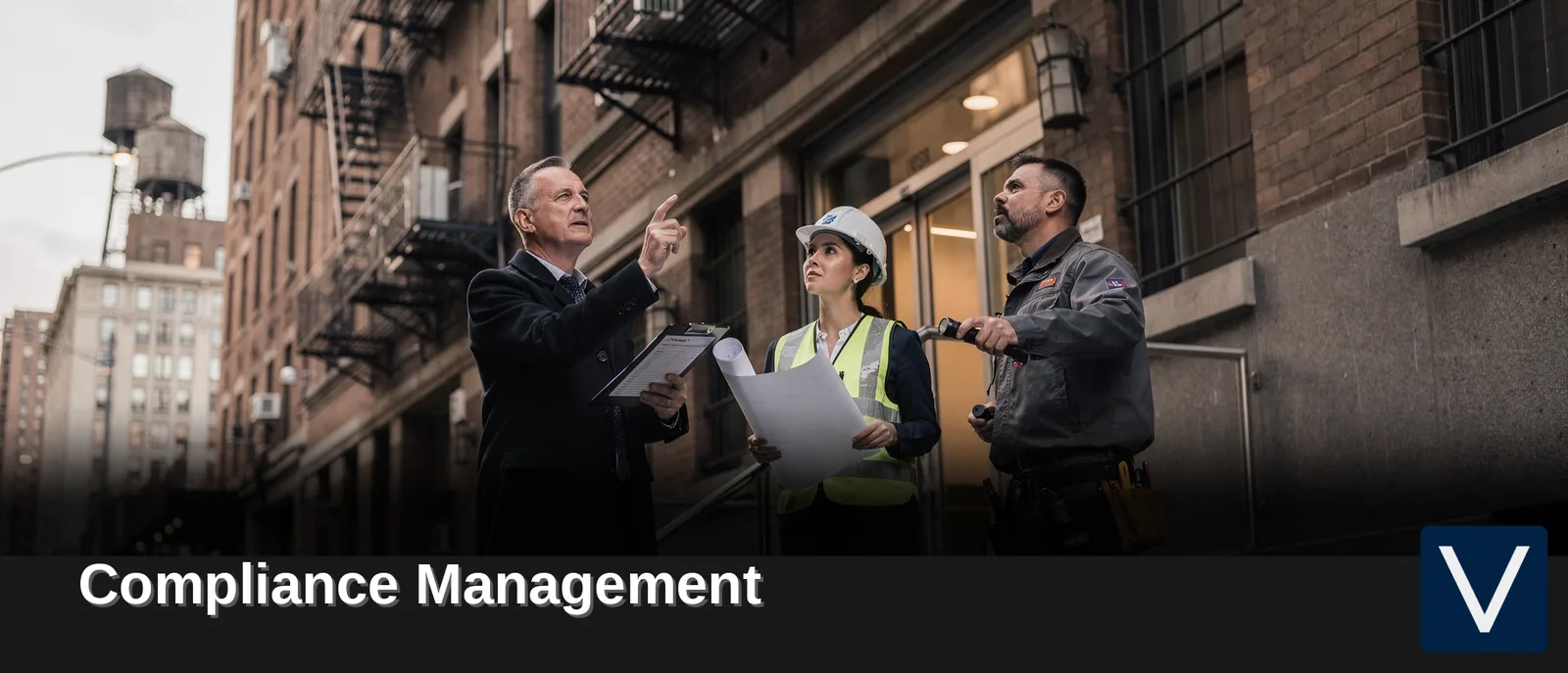
What Compliance Management Covers for Co-ops and Condos
Compliance management for co-ops and condos covers tracking fire safety, boiler, elevator, facade, sprinkler, and gas piping inspections across every…


Financial transparency in real estate has never mattered more than it does right now. With 30-year mortgage rates hovering between 6.5% and 7.2% from 2024 to 2026, tighter lending standards, and operating costs rising an average of 4.5% annually, property owners need clear visibility into every dollar flowing through their rental operations.
This article focuses on how professional property management transforms disorganized financial data into structured, accessible reports that reveal precise income streams, expense allocations, and performance metrics. Whether you’re an individual landlord with a single family home, a small portfolio owner managing 2 to 20 units, or a larger investor overseeing multi-family buildings, you’ll learn specific ways that organized property management operations remove guesswork and hidden costs from rental ownership.
Professional property management converts scattered receipts, bank statements, and transaction logs into standardized financial statements delivered on a consistent schedule. Instead of chasing down paper trails, property owners receive organized profit and loss statements, cash flow summaries, and rent rolls, typically by the 10th of each following month. Standardized reporting allows property managers to efficiently oversee financial management and streamline operations, allowing them to focus on communication, maintenance, and other key responsibilities.
This consistency makes comparability straightforward. When you review December 2025’s report alongside January 2026’s, you’re looking at identical formats and categories, not shifting definitions that obscure trends.
What a transparent monthly statement typically includes:
| Line Item | What It Shows |
|---|---|
| Gross Scheduled Rent | Total rent if 100% occupied |
| Actual Rent Collected | What tenants actually paid |
| Vacancy & Concessions | Lost income from empty units or discounts |
| Operating Expenses | Repairs, utilities, taxes, insurance |
| Management Fees | Property manager’s compensation (typically 8-12% of collected rent) |
| Net Operating Income | True profitability after all deductions |
A standardized chart of accounts separates repairs from capital expenditures, utilities from property taxes, and insurance from management fees. This prevents the common trap where vague “miscellaneous” categories hide real costs. Financial reporting directly affects how well property management businesses run day-to-day, supporting smoother operations and better decision-making.
Consider a practical example: In a 12-unit building, a Q1 2026 report might reveal that Unit 3B incurred $1,200 in repair costs, nearly three times the building average of $450 per unit. That level of detail, impossible with disorganized books, allows targeted intervention before a small plumbing issue becomes a major capital expense.
Cash flow is the most critical metric for rental property owners, especially when mortgage rates and operating costs are volatile. Property management provides clear financial reporting that tracks the exact timing of rent receipts, vendor payments, loan payments, and reserve transfers.
This visibility goes beyond monthly totals. Transparent cash flow statements show when money enters and leaves the operating account, rent typically arriving between the 1st and 5th, bills exiting mid-month, and reserves being funded before distributions.
How this transparency works in practice:
Property managers flag chronic late payers in their reports. Data shows that 10-15% of tenants in average portfolios require payment plans. When you can see which units consistently pay late, you can enforce policies (like three-day notices) or tighten screening criteria, requiring credit scores above 650 and income verification at 3x rent.
Here’s a concrete mini-scenario for a 10-unit property in March 2026:
| Category | Amount |
|---|---|
| Gross Scheduled Rent | $12,000 |
| Actual Rent Collected | $9,500 |
| Operating Expenses | $2,100 |
| Reserve Transfer | $800 |
| Net Cash Flow to Owner | $6,600 |
This granular timing view prevents overdrafts and supports liquidity management. Industry analyses show that self-managed properties with unreconciled statements experience 25% higher cash shortfalls compared to professionally managed ones.
Property management introduces disciplined expense categorization and documentation that reduces the risk of overbilling, duplicate charges, or unauthorized work. Every vendor invoice, plumber, electrician, landscaper, and cleaning service is logged with date, property, unit, work description, and cost.
This documentation appears clearly in owner reports, allowing property owners to verify exactly what was done and why.
How transparent expense tracking reveals trends:
Side-by-side expense views comparing 2024 to 2025 expose patterns that would otherwise remain hidden. For instance, maintenance costs per unit rising from $1,200 in 2024 to $1,450 in 2025 might signal aging HVAC systems, justifying a planned 2026 replacement budgeted at $15,000.
Transparent approval workflows add another layer of control. Most property management firms require owner authorization for expenditures exceeding $500-$1,000 per job. This balances control with efficiency and reduces unauthorized spending by roughly 40%, according to management audits.
Catching patterns before they become problems:
One real-world example involves detecting repeated weekend emergency fees totaling $2,500 from a single vendor during winter 2025. A transparent report made this pattern visible, prompting a switch to scheduled routine maintenance with fixed pricing at $300 monthly per property. The result: emergency calls dropped by 60%, and pricing became predictable.
This kind of expense tracking matters for budgeting future expenses and ensuring maintenance expenses stay within reasonable bounds.
Modern property management software centralizes financial data and gives property owners 24/7 online access through secure portals. This real-time access transforms how investors monitor their properties.
Typical portal features include:
Near-real-time updates, refreshing every 15-60 minutes, allow owners to log in mid-month and see which tenants have made rent payments, which maintenance requests are pending, and what their projected month-end cash position looks like.
Consider an owner traveling abroad in June 2026 who needs to verify a major expense. Through the portal, they can confirm that a $4,300 roof repair invoice was paid and correctly classified as a capital expenditure. They can export the documentation as PDF or CSV for their CPA without waiting for anyone to email spreadsheets.
This kind of transparent financial reporting eliminates hidden numbers and provides peace of mind regardless of where property owners are located.

Transparent financial data directly supports more accurate budgets and forecasts for the coming 12-24 months. When property managers maintain clean financial records over multiple years, patterns become clear, and planning becomes reliable.
Multi-year expense history from 2023-2025, showing repair trends up 12% annually, for example, allows owners and managers to build realistic operating budgets and capital plans for 2026 and beyond.
What good forecasting includes:
| Future Cost | Typical Projection |
|---|---|
| Property Taxes | 5% increase in 2026 |
| Insurance Premiums | 8% increase (climate risk factor) |
| Turnover Costs | $2,500 per unit (cleaning, repairs, lost rent) |
| Routine Maintenance | Based on the 3-year average plus inflation |
Clean, categorized books simplify tax season dramatically. Property management companies generate reports that clearly separate deductible operating expenses (repairs, mortgage interest, insurance, utilities) from capital improvements depreciated over 27.5 years for residential properties. Ensuring compliance with local tax laws is essential for accurate financial management and reporting, making tax preparation more straightforward and reducing the risk of errors.
This transparency reduces financial surprises at tax time and minimizes audit risk. Every line item traces back to an invoice, work order, or bank transaction. IRS data indicates real estate accounts for 20% of penalties resulting from poor financial management, a liability that organized property management helps avoid while maximizing tax deductions.
Transparent property management systems create checks and balances that protect owners from mismanagement and fraud. These financial processes aren’t just administrative; they’re protective.
Internal controls that property management provides:
Quarterly variance reports prove particularly valuable. A Q2 2025 report flagging a 25% utility spike, from $1,800 budgeted to $2,250 actual, prompts an investigation rather than going unnoticed. In this case, the spike revealed water leaks that, once fixed, saved 15% on ongoing costs.
Itemized statements showing who approved what and when make it harder for unauthorized charges or cash leakage to occur. Forensic accounting studies suggest 5-10% of unmanaged properties experience some form of cash leakage, a risk that transparent reporting dramatically reduces.
This level of accountability doesn’t just protect individual owners. It builds confidence among partners and outside investors, which makes it easier to raise capital or expand a portfolio. Transparent portfolios attract lending terms approximately 20% more favorable than opaque ones.
This is how financial transparency matters for long-term success: it’s not just compliance; it’s fostering trust with everyone who has a stake in the property’s financial health.
Detailed property management reporting goes beyond totals, breaking property performance down by individual asset and even by specific unit. This granularity transforms how owners make decisions about multiple properties.
What unit-level insights reveal:
| Metric | Building Average | Underperforming Unit |
|---|---|---|
| Occupancy Rate | 94% | 85% |
| Average Days Vacant | 18 | 25 |
| Effective Rent/SF | $2.10 | $1.85 |
| Operating Expense/Unit | $1,300 | $1,300 |
| Annual Turnover | 1x | 2x |
Seeing that a specific one-bedroom unit has a higher turnover and lower net income than others prompts concrete action: a rent adjustment, amenity upgrade, or different marketing approach to improve tenant retention. Building stronger tenant relationships is a key strategy for property management companies aiming for long-term success. Detailed reporting and proactive management help foster stronger tenant relationships, which in turn support higher retention and better property performance.
This visibility helps owners align strategies with actual performance data. You might decide to sell an underperforming asset with an ROI below 6%, refinance a stable building at current 5.5% rates, or invest in upgrades where they’ll yield the best return.
Data shows optimized portfolios, those managed with granular visibility, outperform by 8-12% annually compared to those relying on guesswork. That’s the difference between maintaining open lines to actual performance versus rough estimates that obscure reality.

Financial transparency depends heavily on communication practices: scheduled updates, clear explanations, and proactive outreach from property managers. Consistent communication keeps owners informed without requiring them to chase information.
Typical communication cadence:
| Update Type | Frequency | What It Includes |
|---|---|---|
| Financial Reports | Monthly | Full P&L, cash flow, balance sheet |
| Performance Review | Quarterly | Video or phone call reviewing trends |
| Large Expense Alerts | Immediate | Notification for unplanned costs >$6,000 |
| Rent Collection Summary | Weekly/bi-weekly | Status of rent collection by unit |
Transparent property managers don’t just send spreadsheets. They annotate major variances, note collection issues, and outline next steps in plain language.
Example of a narrative summary:
“March maintenance costs were 15% above budget ($2,800 vs. $2,400 projected) due to storm damage affecting three units. We’ve completed all repairs, filed an insurance claim for $1,200, and scheduled preventative gutter work to reduce future exposure. April should normalize to budget.”
This kind of transparent reporting reduces owner anxiety and builds trust. For out-of-state or out-of-country investors, especially, strong relationships with their management company depend on never feeling left in the dark.
Effective communication also extends to tenant relations. When tenants are kept informed through maintaining open lines of communication, tenant satisfaction improves, and tenants satisfied with responsive management tend to stay longer, reducing turnover costs. Property management also enhances tenant satisfaction by organizing community events and creating online groups, which foster a positive living environment.
Property management accounting forms the cornerstone of financial transparency, giving property owners a clear, accurate picture of their property’s financial performance. A robust accounting system ensures that every dollar of rental income, management fee, and maintenance cost is tracked and reported in detail. Property managers and property management companies rely on standardized financial statements, such as balance sheets, income statements, and cash flow statements, to provide owners with a comprehensive view of their investment.
With detailed financial statements, property owners can easily monitor cash flow, assess profitability, and identify trends or anomalies in their property’s financial health. Real-time access to these reports through secure portals empowers owners to make informed decisions quickly, whether it’s approving a major repair or evaluating the impact of a rent increase. By prioritizing transparent financial reporting and meticulous record-keeping, property management companies build trust and enable data-driven decisions that support long-term property success.
Managing multiple properties introduces unique challenges, from tracking diverse income streams to coordinating maintenance across different locations. Transparent systems, powered by advanced property management software, are essential for property managers overseeing several assets. These tools centralize financial performance data, maintenance requests, and tenant relations, making it easy for property owners to stay informed about each property’s status.
With transparent systems in place, property managers can generate detailed financial statements and rent rolls for each property, ensuring owners have a clear understanding of rental income, maintenance expenses, and occupancy trends. This level of organization allows for quick identification of underperforming assets, timely responses to maintenance requests, and strategic decisions about rent increases or capital improvements. Ultimately, transparent property management operations help owners optimize their portfolios, improve tenant satisfaction, and maximize returns across multiple properties.
Achieving financial transparency in property management requires a commitment to best practices that foster trust and long-term success. Property managers should provide property owners with regular, detailed financial statements that clearly outline income, expenses, and net operating income. Maintaining open lines of communication is equally important; owners should always feel informed about their property’s financial status and any significant developments.
Clear and consistent financial processes, including diligent expense tracking and timely reporting, help prevent misunderstandings and ensure accountability. Proactive management, such as anticipating maintenance needs and focusing on tenant retention, keeps properties well-maintained and revenue streams stable. By prioritizing these best practices, property management companies strengthen relationships with property owners, support data-driven decision-making, and lay the groundwork for sustained property performance and owner satisfaction.
While financial transparency is critical, many property management companies encounter obstacles such as outdated accounting systems, limited staff training, or resource constraints. Overcoming these challenges starts with investing in modern property management software that streamlines financial reporting and provides real-time access to essential data. Ongoing training ensures that property managers and staff are equipped to use these tools effectively and maintain accurate records.
Establishing clear policies and procedures for financial reporting, expense approvals, and document retention further supports transparency. Open communication with property owners is vital; regular updates and prompt responses to inquiries build confidence and prevent misunderstandings. By addressing these challenges head-on, property management companies can embed financial transparency into their operations, ensuring property owners always have a clear view of their investments.
As the real estate industry evolves, financial transparency will become even more central to successful property management. Property owners increasingly expect real-time access to their property’s financial performance, along with detailed, actionable insights. To meet these expectations, property management companies are turning to advanced technologies like artificial intelligence and machine learning, which can automate financial processes, enhance reporting accuracy, and provide predictive analytics.
These innovations will enable property managers to make more data-driven decisions, optimize property performance, and improve tenant satisfaction by anticipating needs and reducing costs. By embracing cutting-edge technology and maintaining a steadfast commitment to transparent financial reporting, property management companies can build stronger relationships with property owners and position themselves for long term success in a competitive market.
Not all property managers offer the same level of financial clarity. Before signing a management agreement, owners should assess transparency as a core requirement, not an afterthought.
Checklist of what to ask:
Specific questions to ask:
Look for clear written procedures in the management contract regarding reporting frequency, reserve requirements (typically 5-10% of gross rental income), and spending authority for repairs and capital projects.
Owners should feel they can trace every dollar from tenant payments to owner distributions, with no unexplained gaps. If a management company can’t provide insights into how they’ll deliver this transparency, that’s a significant red flag.
Industry metrics show that poor transparency correlates with 25% higher owner churn, a clear signal that investors prioritize visibility when choosing or staying with property management services.
Professional property management improves financial transparency across every dimension: standardized reporting, cash flow visibility, expense tracking, tax readiness, and proactive communication. This transparency isn’t just about having neat spreadsheets; it directly supports higher net income, data-driven decisions, and lower risk over a 5-10 year holding period.
When evaluating your property management business relationship or selecting a new management process, treat transparent financial systems as a non-negotiable requirement. Ask for sample reports, test the portal, and confirm that every dollar can be traced from tenant to your bank account.
Property owners who embrace data-backed, transparent management in 2026 position themselves to scale portfolios, navigate rent collection challenges, and withstand market shifts with confidence. In a real estate environment defined by volatility, expert guidance paired with clear visibility isn’t a luxury; it’s what separates successful investors from those constantly reacting to financial surprises.
Managing property finances becomes easier with professional financial management from Vanderbilt NYC Apt Management. Our team helps property owners stay organized with accurate reporting, rent tracking, expense management, and budgeting support designed to keep your property running efficiently.
Partner with Vanderbilt NYC Apt Management for financial management that focuses on transparency and long-term stability. With the right systems and experienced oversight, you can stay informed about your property’s financial performance while we handle the day-to-day details.