
What Does a Property Management Company Actually Do?
If you own a rental property and you’re wondering whether to hand over the keys to a professional, you’re asking…


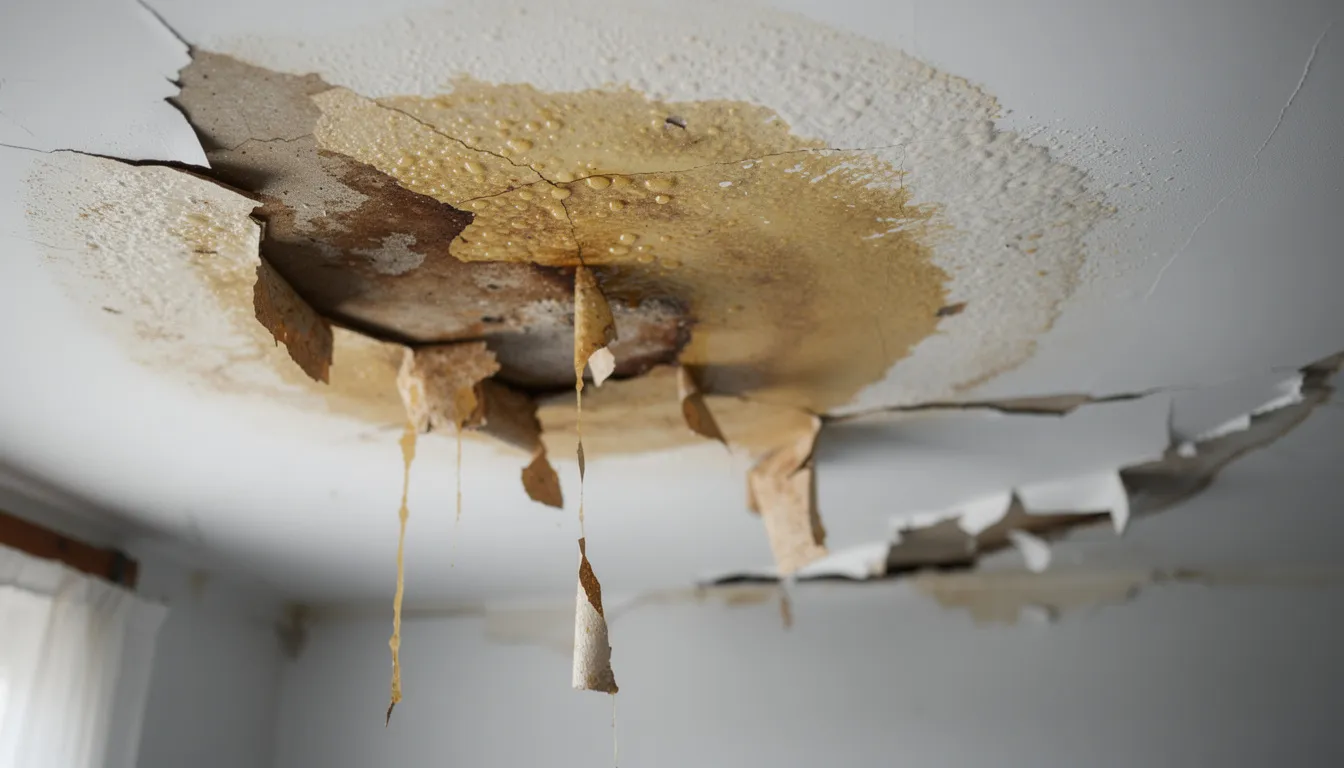
It’s Monday morning. A resident in unit 312 reports a small leak under their bathroom sink. The front desk takes the call, jots it on a sticky note, and promises to pass it along. By Thursday, nobody has logged the request. By Saturday, water has seeped through the subfloor, damaged the ceiling of unit 212 below, and mold is already forming behind the drywall. The final bill: $8,000 in water damage remediation, mold removal, and temporary resident relocation, all from a $75 fix that never made it into the system.
This scenario plays out constantly across rental properties, office buildings, and managed communities. Every maintenance request is a time-stamped risk and opportunity. Tracked promptly, it protects safety, preserves assets, and maintains revenue. Ignored or delayed, it transforms into an emergency that costs exponentially more to resolve.
This article will show property managers, facility leaders, and maintenance teams exactly why prompt tracking of maintenance requests is essential, and how to build a process that captures every issue quickly and consistently. Whether you oversee multifamily rentals, commercial office buildings, HOAs, or industrial sites, the principles apply.
Prompt tracking means logging every request in a central system within minutes to a few hours of receipt, not “whenever someone has time” or “when I get back to the office.”
There’s a critical distinction between three stages that often get conflated:
Prompt tracking focuses specifically on that second stage. The goal is to eliminate the gap between when someone reports an issue and when it becomes visible in your maintenance management system.
Maintenance requests come from multiple sources across any property:
Prompt tracking includes assigning every request an ID number, timestamp, requester name, specific location, and initial priority classification, all on the same day it arrives.
When maintenance issues involving immediate safety risks sit unlogged, they exist in a dangerous limbo. Nobody knows about them except the person who reported them, and that person assumes action is being taken.
Consider this scenario: A tenant reports a loose stair handrail on March 10th. The message gets lost in an overflowing inbox. Ten days later, an elderly resident loses their grip on the same handrail, falls, and breaks their hip. The resulting liability claim and medical costs dwarf what a simple repair would have cost.
Safety-critical request types that must be tracked immediately:
Prompt tracking ensures these items are visible within minutes, triaged as emergencies, and routed to on-call maintenance staff or contractors immediately. When urgent issues are addressed promptly, you prevent minor safety concerns from becoming catastrophic incidents.
Failure to document safety requests weakens your defense in premises liability or habitability cases. Courts look at whether you had notice of a hazard and how quickly you responded.
Your maintenance request process should include a clear “emergency” category with target response times. For gas, fire, and electrical hazards, the standard should be response within 1-2 hours, not 1-2 days.
Most catastrophic repairs started as tiny, inexpensive issues that were never logged or prioritized. The difference between a $200 fix and a $15,000 disaster is often just a few days of delay.
Here’s how minor issues escalate when tracking fails:
The Pinhole Leak
The Noisy Bearing
The Sticky Door
Prompt tracking creates a queue where even “small annoyances” can be batched and scheduled before they escalate. Organizations that log and act on minor issues quickly typically cut emergency repairs by 40-60% over 12-18 months.
This shift from reactive maintenance to proactive maintenance is where the real cost savings emerge. Reduced emergency repairs translate directly to lower maintenance costs and more predictable budgets.
Responsiveness to maintenance requests is consistently one of the top drivers of online reviews and lease renewal decisions. When residents feel heard and see problems addressed in a timely manner, they stay. When they feel ignored, they leave, and they tell others about it.
Consider the math for a 200-unit apartment community:
Prompt tracking supports tenant satisfaction in specific ways:
Slow or lost requests translate directly into negative online reviews, complaints to HOA boards, and non-renewals. In the age of instant communication, a 5-day response to a routine request feels like being ignored.
To improve tenant satisfaction and improve resident satisfaction simultaneously, establish clear service windows and communicate them. When residents know what to expect, and you consistently meet those expectations, trust builds.
Prompt tracking transforms random interruptions into a manageable workflow across sites, teams, and shifts. Without it, maintenance operations run on scattered calls, forgotten voicemails, and technicians who “just know” what needs doing.
With time-stamped data in a central system, you can:
Concrete examples of operational efficiency gains:
A portfolio of 10 buildings, averaging 8-12 requests per property per month, can schedule planned routes by building and system type instead of chasing scattered calls. Maintenance personnel spend less time driving and more time fixing.
A facilities team tracking all requests can spot that 30% of issues involve the same elevator or boiler. Instead of endless small repairs, they schedule a deeper inspection and address the root cause, preventing costly downtime in the future.
Accountability becomes measurable when every request has an owner, a due date, and a completion record. This supports performance reviews for staff and holds contractors to agreed service levels.
Simple metrics to track for operational efficiency:
| Metric | Target | Why It Matters |
|---|---|---|
| Average response time | Under 24 hours (non-emergency) | Measures how quickly you acknowledge issues |
| Average completion time | 48-72 hours (routine) | Shows actual resolution speed |
| % completed within SLA | 90%+ | Indicates process reliability |
| Overdue ticket count | Trending down | Reveals capacity or priority problems |
These metrics enable optimizing resource allocation across your maintenance team and highlight where property management processes need adjustment.
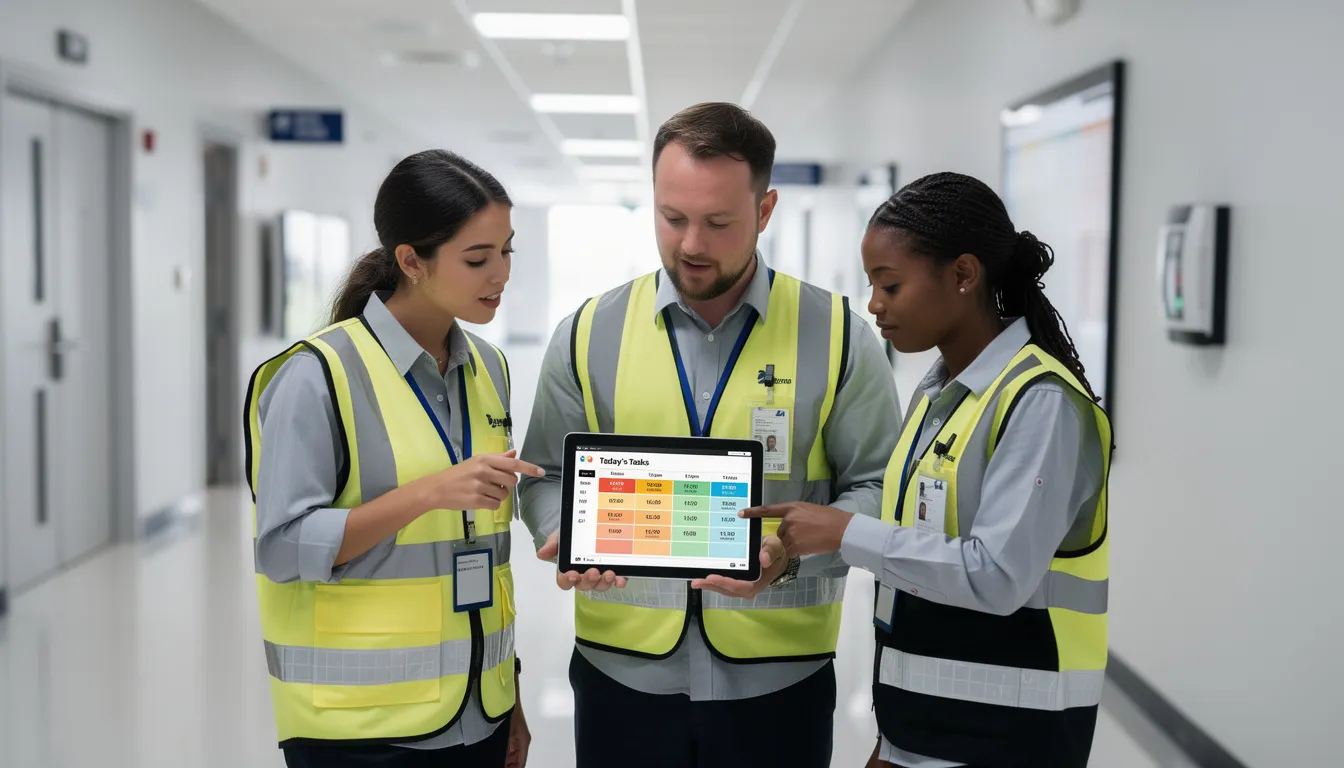
Every promptly logged request adds one more data point for long-term planning, not just today’s fix. Over time, this maintenance data becomes one of your most valuable data assets for a property maintenance strategy.
Using 12-24 months of request history, you can:
Concrete planning examples from tracked data:
After tracking 18 months of plumbing inspections and repair requests, a property manager identifies that one wing of a 1980s building generates 50% of all leak-related work orders. The pattern justifies a planned repipe project that eliminates the ongoing drain on maintenance staff and prevents future costly repairs.
Seasonal pattern analysis shows HVAC requests spike every June (cooling systems) and January (heating failures). Armed with this data, the team schedules preventive tune-ups in May and December, reducing in-season emergency repairs by 35%.
Key fields to capture in each request for useful analytics:
This approach supports predictive maintenance strategies, where you address equipment failures before they happen based on historical patterns. Properties practicing preventative maintenance and routine maintenance scheduling typically allocate 1-3% of asset value annually to upkeep, with a higher share dedicated to prevention rather than reaction.
Regular inspections combined with tracked request history create a complete picture of property condition that informs both annual budgets and long-term capital planning.
Prompt, consistent tracking creates a defensible paper trail for audits, insurance claims, lender reviews, and legal disputes. In property management, what you can prove matters as much as what you did.
Specific regulatory and documentation needs that depend on tracked maintenance:
Examples where documentation protects you:
In an insurance claim following storm-related roof failure in 2025, detailed maintenance logs showing timely repairs and regular inspections strengthen your coverage arguments. The insurer can see that you maintained the property properly, the damage was from an extraordinary event, not neglect.
When a resident alleges that mold was ignored for months, documented tickets showing report date, inspection date, and remediation steps can limit liability risks. Without that trail, you’re left with “he said, she said.”
Requests should be time-stamped at receipt, not retro-entered days later. Backdated entries look suspicious in legal discovery and undermine your credibility.
Recommendations for compliance-ready documentation:
Now for the practical implementation. Here’s how to build a maintenance request management process that captures every issue quickly and consistently.
Define your intake channels clearly:
Set internal service targets:
Standardize request fields:
Train staff thoroughly:
This property maintenance process becomes your standard operating procedure, not something that depends on individual memory or initiative.
Tracking alone isn’t enough. Logged requests must flow into a clear prioritization system with defined response timelines.
Three-tier priority model:
| Priority | Response Time | Examples |
|---|---|---|
| Emergency | Within 2-4 hours | Gas smell, major water leak, no heat in winter below 40°F, fire alarm issues, building-wide power loss, active sewage backup |
| Urgent | Within 1-2 business days | Broken exterior locks, significant HVAC issues in occupied spaces, active but contained leaks, inoperable only bathroom, refrigerator failure |
| Routine | Within 3-7 business days | Cosmetic issues, minor drips, appliance nuisances, squeaky doors, running toilets, caulking needs |
Implementation practices:
Urgent repairs and emergency repairs require clear escalation paths. Define who has the authority to authorize overtime, emergency contractor calls, and after-hours access.
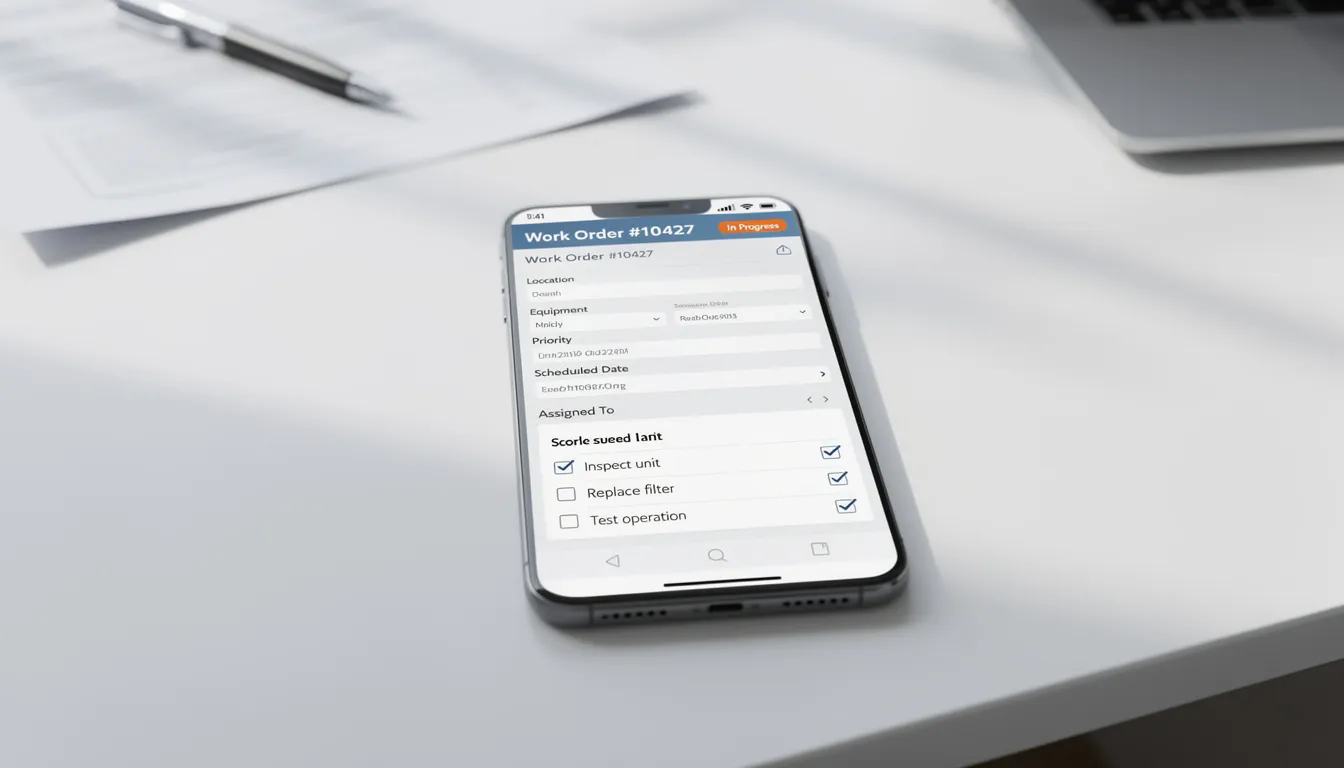
Digital tools make prompt tracking easier and more reliable than paper logs, spreadsheets, and scattered emails. Modern property maintenance software and property management software provide capabilities that manual systems simply cannot match.
Core capabilities to look for in management software:
Practical example of technology-enabled workflow:
A maintenance supervisor overseeing three buildings opens the dashboard at 9:00 a.m. and sees 17 new requests came in overnight: 3 tagged as emergencies, 8 urgent, 6 routine. By 9:30 a.m., all have been reviewed, prioritized, and assigned to the appropriate maintenance technicians. No sticky notes. No forgotten voicemails.
Valuable integrations to consider:
Start with simple digital workflows first, basic ticket logging and assignment. Then layer advanced features like predictive maintenance alerts and automated scheduling over time.
Property management software eliminates the gaps where requests get lost. Automated scheduling and reminders ensure nothing falls through the cracks, even during busy seasons or staff transitions.
Tools and processes only work if everyone involved, residents, occupants, staff, vendors, understands the importance of quick reporting and data entry.
Educate residents and occupants during move-in or onboarding:
Establish internal policies that reinforce prompt tracking:
Recognize and reinforce desired behaviors:
Building this culture takes consistent reinforcement. When everyone understands that every request matters, whether it’s a simple drip or a major leak, your property maintenance process becomes truly reliable.
Promptly tracking maintenance requests protects resident and occupant safety, prevents minor issues from becoming expensive disasters, boosts tenant satisfaction and retention, improves operational efficiency, provides valuable data for planning and budgeting, and reduces legal and insurance exposure. These aren’t separate benefits; they compound together into measurable property value and performance.
Delays in logging are invisible costs that accumulate over time. Each untracked request is a potential emergency, complaint, or liability claim waiting to materialize. The difference between excellent property maintenance and constant firefighting often comes down to whether issues enter your system in minutes or days.
Your action plan for the next 30 days:
Organizations that treat every maintenance request as a data point and a commitment, not just another task, see measurable gains in property performance and occupant trust. They spend less on emergency repairs, retain more tenants, and make smarter capital decisions based on real maintenance strategies informed by years of tracked history.
Make prompt tracking your standard operating procedure. The properties that do will consistently outperform those still running on sticky notes and scattered emails.
Seasonal maintenance for a Queens condo or co-op demands expertise, consistency, and keen attention to detail. From creating tailored seasonal maintenance checklists to coordinating vendors and ensuring compliance, professional property management turns reactive problem-solving into proactive building care.
At Vanderbilt NYC, we help Queens condo and co-op boards maintain their buildings year-round. Our team knows the unique challenges of NYC multi-family properties, from aging infrastructure to changing regulations, and provides solutions that keep your building running smoothly.
Want to ensure your building stays in top condition every season? Contact Vanderbilt NYC today to learn how we can support your board’s maintenance goals and pr